
Bland County Parole Versus Probation
Parole and probation both allow a person to live in the community under rules, but they begin in different ways. Parole is conditional release from prison for a sentence that is legally eligible. A Board action may grant parole, yet that action does not prove the person has left the prison. VADOC sets the later release date and issues the release papers. Probation is imposed by a court. It may follow a jail or prison term, or a judge may suspend part of a sentence and place the person on probation.
Virginia community supervision is administered by the Virginia Department of Corrections. That shared administrator does not erase the legal difference. The order, status record, and end point must be read in context.
| Point | Parole | Probation |
|---|---|---|
| How it starts | Conditional release from prison in an eligible case | A court orders supervision as part of a sentence |
| Key record | Board decision, VADOC release papers, and locator status | Court order and VADOC supervision status |
| Who supervises | VADOC community supervision | VADOC community supervision |
| How it ends | Official discharge from parole supervision | Completion or discharge under the court and VADOC record |
For most Virginia felonies committed on or after January 1, 1995, discretionary parole was abolished by Virginia Code §53.1-165.1, subject to current exceptions. Older and excepted cases require the live eligibility rules. A modern prison release should not be called parole without proof.
Verify Bland County Post-Release Supervision
The correct check starts with custody class. A person released from New River Valley Regional Jail may be on probation, may have bonded out with a case still pending, or may have transferred to another custodian. A person leaving Bland Correctional Center is in the VADOC system. The statewide Inmate and Supervisee Locator covers people in VADOC custody and those on active district supervision. It is updated daily, but VADOC warns that information can be inaccurate or out of date.
- Identify whether the last custody was NRVRJ or a VADOC prison. Use the Bland court order when the path is unclear.
- Open the VADOC Inmate and Supervisee Locator. Search with the first three letters of the first name and the full last name, or use the seven-digit DOC number.
- Read the status and location. An institution result indicates custody. A probation, parole, or District 16 result supports active community supervision.
- Call District 16 when an official confirmation is needed. Ask about the status shown, not private case details that the office cannot release.
- If the person no longer appears, check the proper discharge record. A missing live result alone does not prove that supervision ended.
The full Bland County released-inmate path, including jail and court checks, is available from the Bland County release search. Use it when no supervision record appears or when the prior custodian is uncertain.
The official locator screen shows how VADOC combines custody and supervision in one tool. View the VADOC locator source before using the captured view.
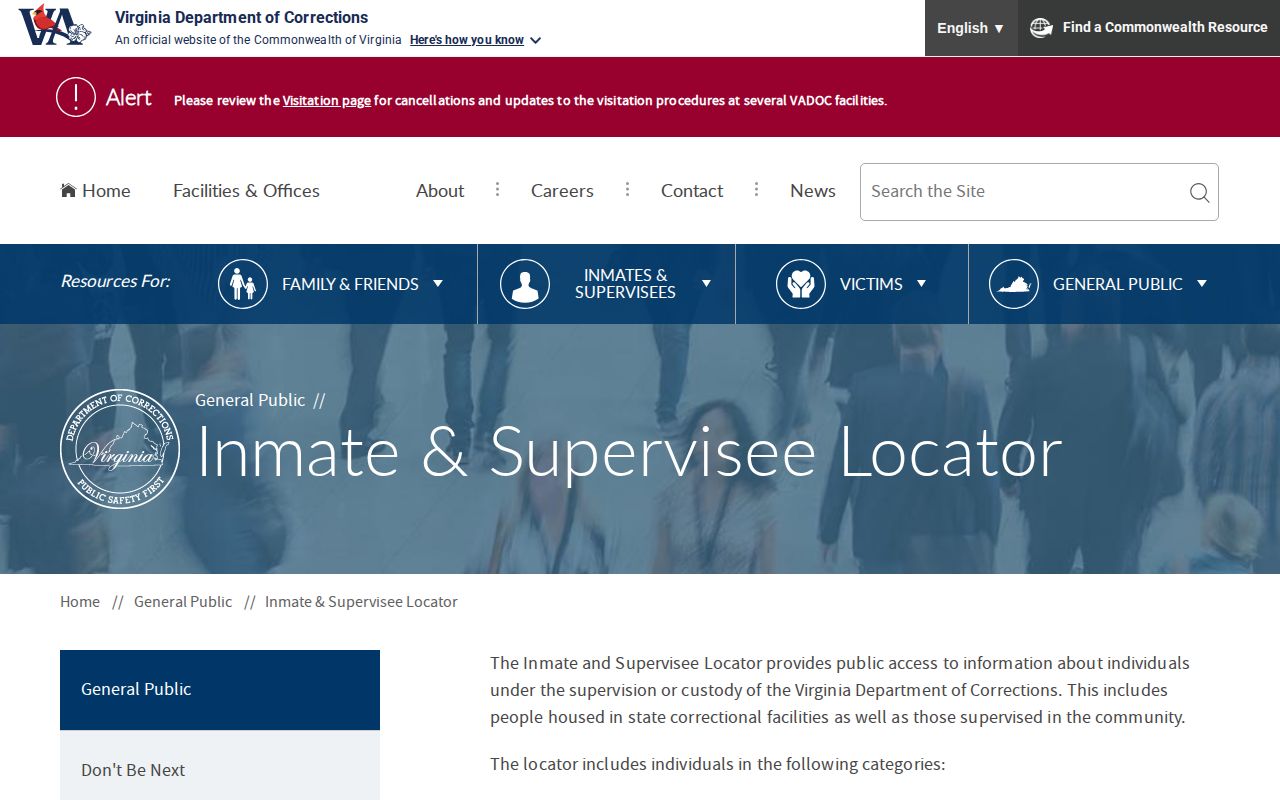
A result tied to a supervision district can support post-release status, while an institution result points to continued VADOC custody.
Note: Match more than a name before calling an office, since similar names and stale details can lead to the wrong conclusion.
Bland County Supervision Uses District 16
Bland County has no separate VADOC probation and parole district. The responsible regional office is Probation and Parole District 16 in Wytheville. VADOC lists it as serving Bland and nearby jurisdictions. The statewide locator should be checked first because the supervising district can change with an approved residence, case action, transfer, or later discharge. District 16 is the confirmation route when the record points there.
VADOC Probation and Parole District 16
500 Peppers Ferry Road
Wytheville, VA 24382
276-228-5311
The office may confirm public supervision information, but no source promises a Bland-specific check-in schedule or public access to every condition. Do not infer a routine from another district. Court orders, signed conditions, and the supervisee's own papers are the direct sources for case-specific terms.
Bland County Supervision Status Terms
Conditions are the rules that govern a parole or probation term. They may come from the court, the Board, VADOC, or more than one source. A violation is an alleged failure to follow a condition. It may lead to a warning, a hearing, a court action, revocation, or another response authorized by the case. The public status alone rarely explains the whole event.
- Parole
- Conditional release from prison in a case that remains subject to supervision.
- Probation
- Court-ordered community supervision, often tied to suspended sentence terms.
- Absconder
- A person alleged to have stopped reporting or maintaining required contact.
- Revocation
- An official action that can cancel part of community release after due process.
- Discharge
- The formal end of the supervision term, distinct from release from a facility.
No authoritative Bland County public absconder list was found. An absconder label does not prove a new conviction. A missing VADOC result also does not prove a warrant. Check the responsible court or law enforcement agency for warrant status, and use District 16 for supervision confirmation. VINELink reports custody events supplied by participating agencies; it is not a public probation violation docket.
Virginia's notification tools do not fill that gap. Local VINE tracks events supplied by participating jails, while VADOC's separate NAAVI service covers specified state-custody events. VADOC states that NAAVI does not provide probation or parole notifications. A person seeking a supervision update should use the locator, District 16, the court record, or the Parole Board report that fits the event.
Note: A supervision violation may change custody status, but the court, VADOC, and jail records must be read as separate sources.
Bland County Parole Record Timeline
Parole records appear in stages. Eligibility or a hearing means a case may be reviewed. A meeting agenda is not a decision. The Virginia Parole Board then reports a grant or denial, reasons, and votes in its public materials. Even a grant does not mean the person has walked out. VADOC assigns the physical release date and prepares the order and conditions. After time in the community, a separate discharge record can show that parole supervision ended.
The Virginia Parole Board meeting page posts the next meeting information, agendas when available, livestream details, and past minutes. Dates are posted individually. Not every eligible person has a public meeting, so the calendar is not a complete parole lookup.

The captured meeting page helps locate current Board proceedings, but it cannot establish physical release or final discharge.
Monthly decision reports serve a different role. Under Virginia Code §53.1-136, the reports describe prior-month actions with decision details. The annual parolee-discharge report is later still. It includes supervision start and discharge dates, the original maximum expiration date, discharge basis, and Board vote. That archive is useful when a fully discharged person no longer falls within the locator's current scope.
Property After Bland County Release
Release paperwork can matter beyond the gate. NRVRJ says a released person may have remaining account funds mailed or may elect to pick them up in person. The jail does not publish a full release-property process. A person resolving their own funds should use the NRVRJ account guidance and confirm the current procedure directly with the jail.
VADOC documents a more formal prison-release process. Staff use a property-envelope receipt and return identification or education documents held in that envelope. Personal property and funds are also addressed, subject to different handling when a detainer sends the person to another custodian. Signed conditions of probation or parole may be provided at the same stage. Those papers help separate the date prison custody ended from the date supervision began.
The official VADOC facility-release guidance describes the papers and property steps used for a state-prison release.
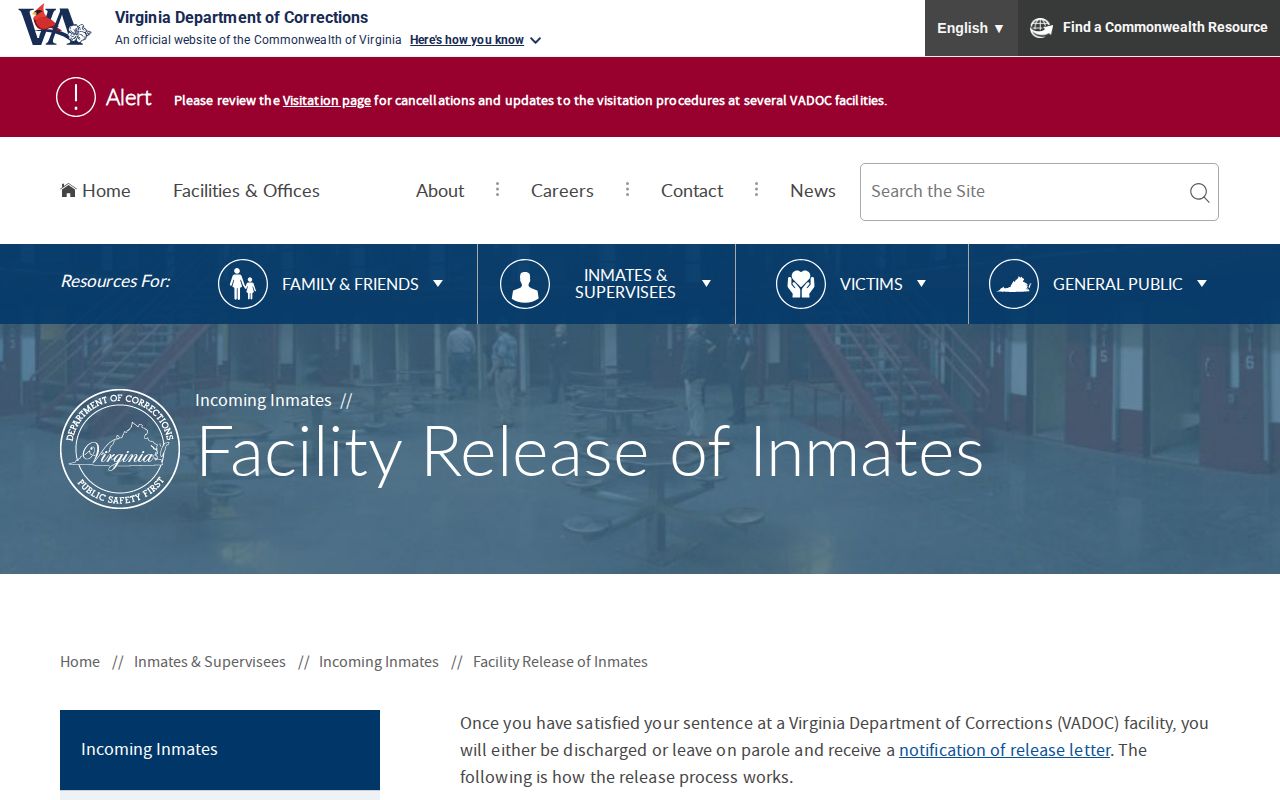
This release process supports the timeline: prison exit and the start of community supervision can occur together, while final discharge comes later.
How Bland County Supervision Ends
Physical release is not final discharge. A VADOC locator change from Bland Correctional Center to District 16 supports a move from prison custody into community supervision. The person remains under correctional authority. Later, completion may be shown by an official VADOC response, a court record where probation is involved, or a Virginia Parole Board annual discharge entry for parole.
The Board's parole reports page provides both monthly decisions and annual discharge reports. Read the report type before drawing a conclusion. A monthly grant starts a later release process. An annual discharge row identifies the later end of parole supervision. If a person vanishes from the live locator, search the discharge report and request agency confirmation instead of treating the no-result as proof.
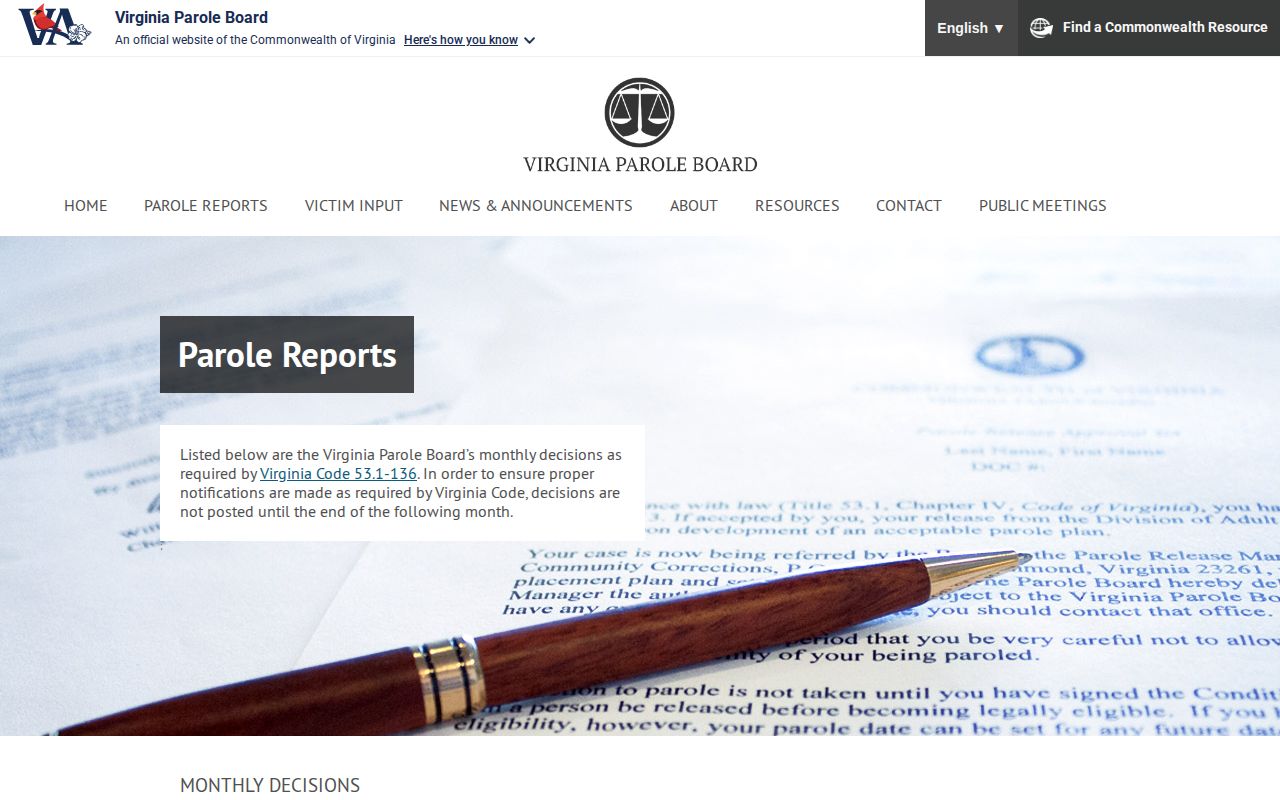
The reports navigation shows why a decision record and a discharge record must not be used as if they were the same event.
A court may also end or modify probation. The signed order controls. Once the term is officially discharged, that end date should not be substituted for the earlier jail or prison release date. Keeping the events separate prevents a common Bland County records error.
Probation completion should be checked against the court's signed order as well as the VADOC status. A suspended term can remain part of the sentence even after confinement ends, and later court action may change how that term is treated. For parole, the annual discharge entry answers when Board supervision ended and why. For either form of Bland County supervision, record the prison or jail release date, the supervision start date, and the discharge date as distinct facts. That sequence shows whether the person is released but supervised, fully discharged, or still tied to an unresolved custody event.